
A term that's been watered down until it means almost nothing
"High-performance home" gets used in a lot of brochures. Production builders slap it on a spec sheet because they upgraded to a 15 SEER HVAC unit. Realtors put it in a listing because the home has "energy-efficient windows." Somewhere along the way, the phrase stopped meaning much of anything.
At Visten, we use it because there's no better term for what we actually build. But we owe every client a real definition — the one we hold ourselves to, not the marketing-department version. This Journal entry is that definition.
The one-sentence version
A high-performance home is a house engineered as a complete system — envelope, mechanicals, air, water, and light working together — to deliver measurably better comfort, health, durability, and operating cost than a code-built home, over the full life of the building.
Every word in that sentence is doing work. Let me unpack it.
"Engineered as a complete system"
The single biggest difference between a high-performance home and a code-built home isn't any one component. It's whether the components were designed to work together in the first place.
Building code sets a floor. It tells you the minimum wall insulation, the minimum window U-value, the minimum HVAC efficiency. A code-built home meets each of those minimums independently — the framer frames, the HVAC sub sizes equipment off a rule of thumb, the insulator fills the cavities, and nobody's job is to make sure the whole thing works as one.
A high-performance home starts from the opposite direction. We design the envelope first. Then we size the mechanicals to that envelope. Then we detail the air barrier, the vapor control, the ventilation, and the moisture management to match. Every trade is executing against a plan that already knows what every other trade is doing.
That's not a bigger version of code-built. It's a different product.
The five performance categories that actually get measured
Marketing claims are easy. Measurements are hard. A real high-performance home performs in five categories you can actually test:
1. Thermal envelope
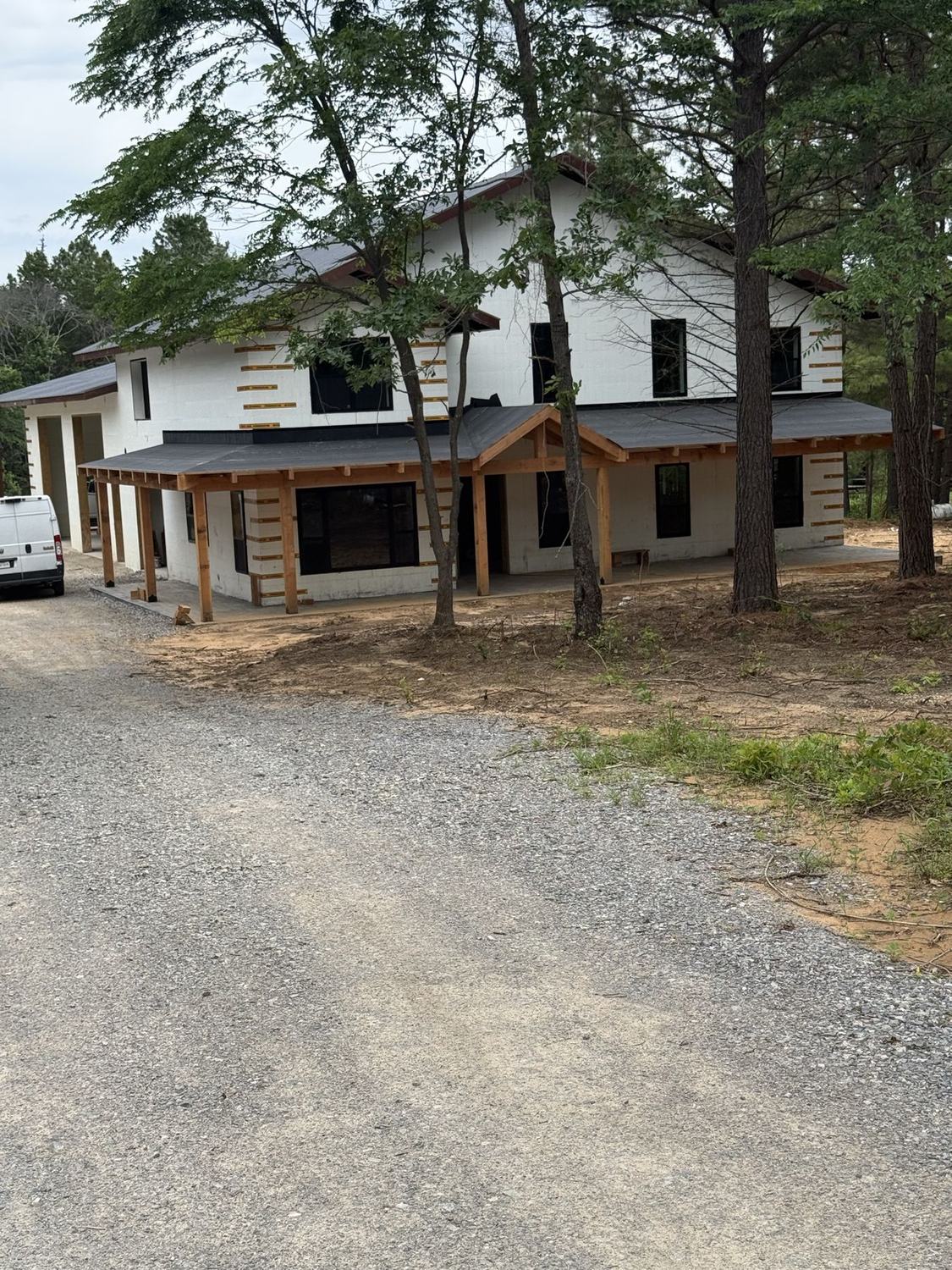
How well the walls, roof, foundation, windows, and doors resist heat flow. This is where our ICF and thermally broken panel programs live. We're targeting continuous insulation with no thermal bridges — meaning no studs, plates, or headers running straight through the wall short-circuiting your R-value.
2. Air tightness
How much conditioned air your house loses to the outside. This is measured by blower-door testing (ACH50 — air changes per hour at 50 pascals). A code home in Texas might test at 5–7 ACH50. A well-built Visten envelope targets 1.5 or lower. That's not a small difference — that's the difference between a house that leaks a third of its conditioned air and a house that doesn't.
3. Mechanical performance
Right-sized HVAC (not the oversized units most builders default to), properly designed ductwork inside the conditioned space, and dedicated mechanical ventilation with heat or energy recovery. A tight house without proper ventilation is a sick house. We plan both together.
4. Moisture and durability
Where the air barrier lives. Where the vapor retarder lives. How the wall dries when it inevitably gets wet. This is the category that separates a house that lasts 100 years from a house that has hidden rot in 20. Most of it is invisible after drywall goes up, which is why it has to be right the first time.
5. Indoor environmental quality
Air quality, humidity control, daylight, acoustics, and low-emission materials. A high-performance home isn't just efficient — it's a healthier place to live and sleep. The tighter the envelope and the better the ventilation, the more you actually control what you're breathing.
The four things you feel every day
The five categories above are what an engineer measures. Here's what a homeowner actually experiences:
- The temperature is the same in every room. No cold corner in the master bedroom. No hot upstairs. The house is designed so it isn't.
- The house is quiet. Thick walls, tight envelope, better windows. You notice it the first time it storms.
- The utility bill is smaller — and stable. 30–50% lower than a comparable code home is typical. And when energy prices spike, your exposure is a fraction of your neighbors'.
- The air is cleaner. Filtered, ventilated, dehumidified on purpose. Not by accident.
Those four things are what people are actually buying when they say they want a high-performance home. The engineering is how we deliver them.
What high-performance is not
Some things get called high-performance that aren't:
- "Energy-efficient windows" on an otherwise standard house. Windows matter, but they're one component. A great window in a leaky wall assembly is still a leaky wall assembly.
- A high-SEER HVAC unit in an oversized configuration on a leaky envelope. You just bought a more expensive way to condition air that's about to escape.
- Spray foam in the attic with no plan for ventilation or moisture. Foam is a tool. It's not a strategy.
- "Green" finishes and materials with no envelope or mechanical thinking behind them. Bamboo floors don't lower your utility bill.
None of those things are bad. They're just not high-performance on their own. High-performance is a system property, not a shopping list.
Why we build this way
Three reasons, in order of how often clients raise them:
- The house costs less to own. Utility savings compound over 30 years into real money — often enough to pay back the premium on the build several times over. On a cost-plus job, we can show you those numbers in the pre-construction budget.
- The house is more comfortable to live in. Once a family lives in a properly engineered envelope with balanced mechanicals, going back to a code-built house is almost impossible. Every client I've had say this to me has said it in almost the same words.
- The house lasts longer, with less maintenance, and holds its value better. A house engineered as a system doesn't develop the failure modes that code-built houses do at year 15, 20, 25. Fewer callbacks, fewer surprises, better resale story.
The honest trade-off
You'll notice a pattern across these Journal entries — I'm not going to tell you high-performance is free. Here's what a client should know going in:
- The build costs more upfront. Not double. Typically a meaningful single-digit-to-low-double-digit percentage over a code-minimum build, depending on which systems we specify. On a cost-plus job, every one of those dollars is visible in the estimate.
- The design timeline is a little longer. Because we're engineering the systems together instead of layering them independently, pre-construction takes real time. That's a feature, not a bug — the homes we've had into pre-construction the longest are the ones the clients love most after move-in.
- You need a builder who actually knows how to do this. High-performance homes are unforgiving of trade errors. Air barriers get sealed once. Mechanicals get sized once. Envelopes get detailed once. There is no version of high-performance building where you can hire the cheapest sub and hope it works out.
The Visten position, plainly
We build high-performance homes because after 35 years of watching what fails and what doesn't, I know the difference between a house that meets code and a house that performs. Code is a floor. It's the least-bad house the government will allow. That's not what a family should be paying custom-home money to build.
When we sit down with a client at the kitchen table, the conversation isn't "do you want the upgrades or not?" It's "here's what a house engineered as a system does for you — for the next 50 years — and here's what it costs to build it that way, in the open, line by line."
That's what high-performance means at Visten. It's not a spec-sheet claim. It's the house.
If you're planning a custom home in Wichita Falls, Burkburnett, Iowa Park, or anywhere in North Texas, let's talk about what a house engineered as a system could look like for your family.
Call (940) 905-1139 to book your consultation.
— Duane Holloway, Co-Founder, Visten Construction Group