
The moment I know a client is about to be misled
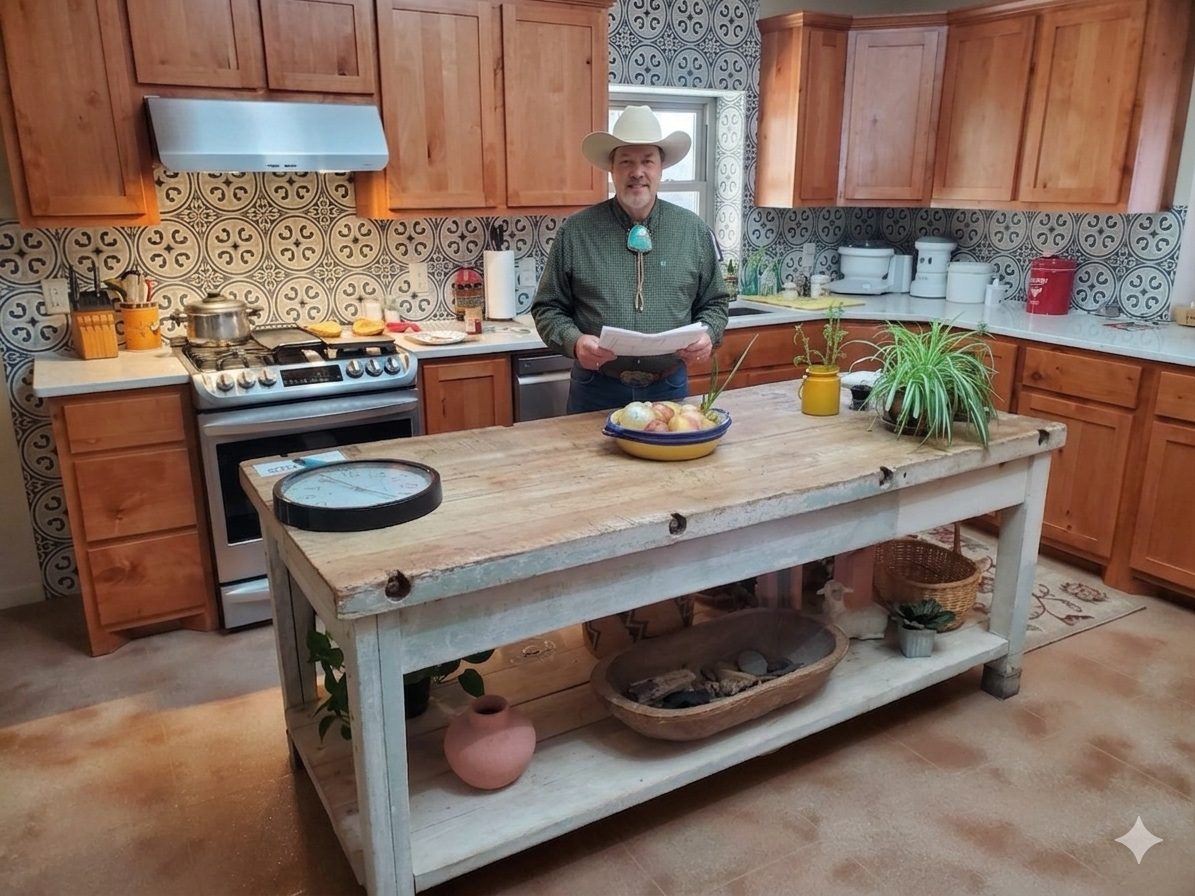
I've sat across the table from a lot of families over 35 years. And there's a specific moment I've learned to watch for — usually about ten minutes into the first meeting, when someone asks:
"So what's it going to cost to build our house?"
If the builder answers that question with a single number before a single line has been drawn, that family is about to be misled. Not necessarily lied to — misled. There's a difference, and it's the difference this Journal entry is about.
At Visten, we build on a cost-plus model. It's the pricing structure I've watched serious custom builders use for decades, and it's the one we've built our entire client process around. But it only works if the client actually understands it — which is why I explain it the same way, every time, at the kitchen table. This is that explanation, written down.
Two ways custom homes get priced
There are really only two pricing models in custom construction, no matter how many names they get dressed up in.
Fixed-price (lump-sum)
The builder gives you one big number — say, $1.4M — and agrees to build your house for that price. Sounds clean. Sounds safe. Feels like buying a car.
Here's what's actually happening inside that number:
- The builder guessed at costs for materials, labor, and subs that won't be ordered for 6–18 months
- To protect against being wrong, they padded every line with a contingency you never see
- If costs come in under the padded number, the builder keeps the difference
- If costs come in over, you fight about change orders
The number feels certain. The certainty is an illusion — paid for by a hidden markup that can be substantial, buried inside the price you never see broken out.
Cost-plus
The builder charges you the actual cost of everything that goes into your house — every 2x4, every yard of concrete, every hour of labor, every sub's invoice — and adds a clearly stated fee on top for their work managing the project.
Two numbers. Both visible. Nothing hidden.
That's it. That's cost-plus.
What "the plus" actually is
The builder's fee — "the plus" — is how the builder gets paid to run your project. At Visten it covers:
- Project management from pre-construction through closeout
- Scheduling and sub coordination
- Quality control and inspections
- Warranty and post-close support
- The office infrastructure (estimating, accounting, insurance, software) that keeps your job running
What our percentage does not cover: on-site supervision. A dedicated job-site superintendent is a direct project cost, billed as a line item on your estimate — not folded into our fee. We do this deliberately. Supervision is real labor on your specific project, and burying it inside a percentage would obscure what you're actually paying for. You see the supervisor's cost the same way you see the framer's cost: itemized, transparent, in the open.
We state the fee as a percentage of direct costs in the contract, in plain English, before you sign anything. You will know exactly what you are paying us to build your home. There is no version of a Visten proposal where you have to guess.
Why we won't quote a fixed price on a custom home
I get asked this a lot: "Why can't you just tell me what it'll cost?"
The honest answer is that on a truly custom home, no one can tell you — not accurately — until the design is done, the specifications are locked, and real quotes have come back from real suppliers. Anyone who gives you a fixed number before that point is doing one of three things:
- Guessing high to protect themselves, which you pay for
- Guessing low to win the job, then making it up on change orders
- Pricing a house they've already built (a plan they know) — which isn't a custom home, it's a plan home with your finishes
There's nothing wrong with a plan home. We'll build one and price it that way if that's what fits. But if you're designing something from scratch — your lot, your layout, your systems, your specifications — the only honest way to price it is cost-plus.
The transparency promise, in practice
Cost-plus only works if the client can actually see what they're paying for. If the numbers are hidden inside a spreadsheet no one shares, "cost-plus" becomes fixed-price with extra steps.
Here's what open-book pricing looks like at Visten:
- Line-item estimate. Every category of cost — site work, foundation, framing, ICF, roofing, mechanicals, finishes, allowances — is broken out on its own line, in language you can read without a construction dictionary.
- Client portal. Your budget, actual costs to date, approved changes, invoices, schedule, and job-site photos live in a portal you log into. You see what we see.
- Every invoice is visible. Subcontractor and supplier invoices flow through the portal. You are not taking our word for what concrete cost — you can look.
- Change orders are pre-approved and priced before work happens. No surprises, no "we already did it, here's the bill."
- Allowances are set with real numbers. If your appliance allowance is $18,000, that's because we sat with real quotes, not because we picked a round number that looked good on a proposal.
That's the "Built in the Open" part of how we work. It's not a marketing line — it's an operating discipline.
The trade-off nobody talks about
I'm not going to tell you cost-plus is free lunch. Here's the honest trade:
- You do not get one number at the start. You get a well-supported budget with defined allowances and a stated fee — but the final number lands at the end, based on actual costs. If that uncertainty is unacceptable to you, cost-plus is not the right model, and we'll tell you that in the first meeting.
- You have to make decisions on a schedule. Selections, changes, and approvals affect real costs in real time. Cost-plus rewards clients who engage with their project. It punishes clients who go silent for three months and then want to change the kitchen after cabinets are ordered.
- It requires a builder who can actually run open books. Not every builder can. It takes real job-cost codes, real estimating software, real accounting discipline, and a portal that doesn't hide anything. This is why we've invested in the systems we have — cost-plus without infrastructure is just chaos with a nicer name.
The clients who thrive on cost-plus are the ones who wanted transparency in the first place. The ones who really want a single, guaranteed number should probably be buying a plan home from a production builder, and there's no shame in that — it's just a different product.
What cost-plus protects you from
Here's what most families don't realize until they're deep into a fixed-price build: the biggest risk in custom construction isn't the price going up. It's not knowing why.
On a fixed-price job, when something changes, you get a change order with a number on it and no context. You have no way to know if that number is fair.
On a Visten cost-plus job, when something changes:
- You see the actual quote from the sub or supplier
- You see the impact on the overall budget
- You approve it before work happens
- Our fee applies at the stated percentage — not a made-up markup
You're never wondering whether you're being fair-dealt. The books are open. You can look.
The Visten position, plainly
We build cost-plus because after three decades in this industry, it's the only model I can look a client in the eye and defend. Fixed-price works for tract homes and plan homes where the builder has already built the same house fifty times and knows the costs cold. It does not work — honestly — for custom homes, no matter how much the industry pretends it does.
If you want to know what your custom home actually costs to build, and you want to see every dollar of it as it happens, cost-plus is how you get there. And if you want a builder who's willing to show you the books instead of hiding behind them, that's who we've built Visten to be.
That's what "Built in the Open" means. And that's how every Visten project is priced.
If you're planning a custom home in Wichita Falls, Burkburnett, Iowa Park, or anywhere in North Texas, let's sit down and walk through what open-book pricing looks like for your project.
Call (940) 905-1139 to book your consultation.
— Duane Holloway, Co-Founder, Visten Construction Group